
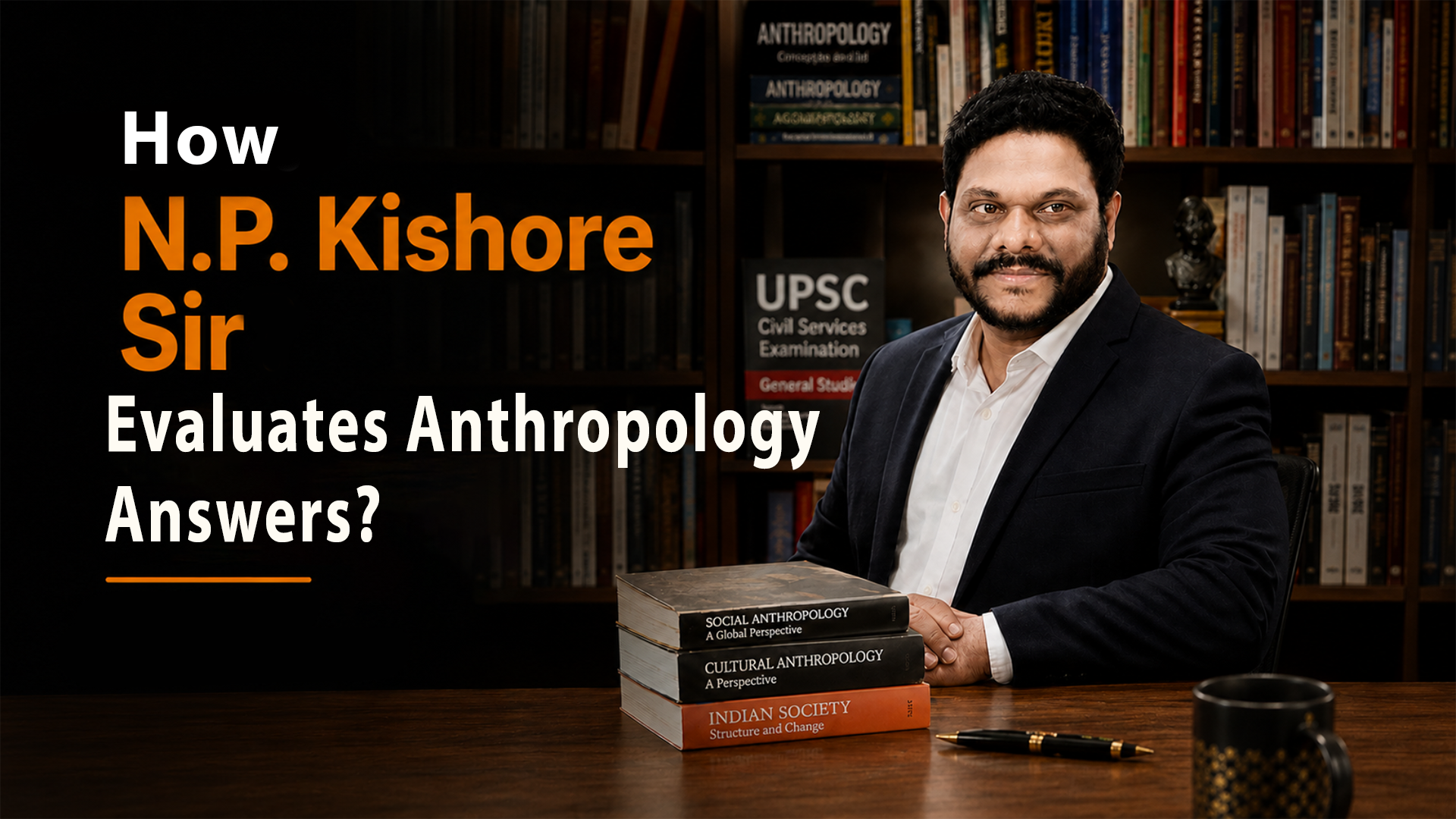
How N.P. Kishore Sir Evaluates Anthropology Answers?
Success in UPSC Mains is not just about studying hard; it is about writing answers that meet the expectations of the examiner. This becomes even more important in Anthropology Optional, where a well-structured answer can significantly improve your score. Many aspirants spend months completing the syllabus but struggle to understand why their marks remain stagnant.
The difference often lies in answer evaluation.
At VIJETHA IAS ACADEMY, renowned Anthropology mentor N.P. Kishore Sir follows a unique and result-oriented approach while evaluating answers. His evaluation methodology has helped numerous UPSC aspirants improve answer-writing skills, enhance presentation, and secure higher marks in Anthropology Optional.
In this article, we will explore how N.P. Kishore Sir evaluates Anthropology optional answers writing and why his feedback process has become a valuable asset for serious UPSC aspirants.
Why Answer Evaluation Matters in Anthropology Optional
Many candidates assume that writing tests alone is enough. However, improvement happens only when answers are carefully evaluated and mistakes are corrected.
A quality evaluation process helps aspirants:
- Understand examiner expectations
- Improve answer structure
- Identify conceptual gaps
- Learn effective presentation techniques
- Develop analytical thinking
- Increase scoring potential
Without expert evaluation, aspirants may continue repeating the same mistakes throughout their preparation.
The Evaluation Philosophy of N.P. Kishore Sir
N.P. Kishore Sir believes that every answer should demonstrate three key qualities:
Conceptual Clarity Anthropology is a scientific and analytical subject. Answers must reflect a clear understanding of concepts rather than superficial memorization.
During evaluation, he carefully checks whether the candidate:
- Understands the core concept
- Applies anthropological theories correctly
- Uses appropriate terminology
- Avoids factual inaccuracies
A conceptually strong answer always receives better feedback and scoring guidance.
Relevance to the Question
One of the biggest mistakes aspirants make is writing everything they know instead of answering what is actually asked.
N.P. Kishore Sir evaluates whether the answer:
- Addresses the demand of the question
- Stays focused on the topic
- Includes relevant examples
- Maintains logical flow
The ability to write precise and relevant answers is a major scoring factor in UPSC Mains.
Balanced Analysis
Anthropology answers should not merely present facts. They should demonstrate analytical thinking and anthropological understanding.
While evaluating, he looks for:
- Critical analysis
- Multiple dimensions
- Comparative perspectives
- Contemporary relevance
- Application-based understanding
Balanced answers often stand out in the evaluation process.
Key Parameters Used During Evaluation
1. Introduction Quality
The introduction creates the first impression.
- N.P. Kishore Sir checks whether the introduction:
- Directly addresses the question
- Defines important concepts
- Sets the context effectively
- Remains concise and relevant
A strong introduction establishes a clear direction for the entire answer.
2. Structure and Organization
A well-organized answer is easier for examiners to understand.
Evaluation focuses on:
Logical sequencing
Proper headings and subheadings
Smooth transitions
Clear paragraph structure
Structured answers often score better because they improve readability.
3. Anthropological Content
This is one of the most important aspects of Anthropology Optional.
Answers are evaluated for:
Anthropological theories
- Thinkers and scholars
- Case studies
- Tribal examples
- Current relevance
- Conceptual accuracy
N.P. Kishore Sir emphasizes discipline-specific content that differentiates Anthropology answers from general studies responses.
4. Diagrams and Flowcharts
Anthropology is one of the few UPSC optional subjects where diagrams can significantly improve presentation.
During evaluation, special attention is given to:
- Neat diagrams
- Flowcharts
- Tables
- Illustrations
- Visual representation of concepts
Well-drawn diagrams enhance answer quality and make complex ideas easier to understand.
5. Conclusion Effectiveness
A good conclusion leaves a lasting impression.
The evaluation process checks whether the conclusion:
- Summarizes key points
- Provides a balanced perspective
- Reflects anthropological understanding
- Ends on a positive note
Strong conclusions often help answers appear complete and mature.
Over the years, several recurring mistakes have been observed among Anthropology Optional aspirants.
Writing Generic Answers
Many students write answers that could fit General Studies rather than Anthropology Optional.
Lack of Anthropological Thinkers
Answers often miss references to important anthropologists and theories.
Poor Presentation Absence of diagrams, flowcharts, and structured formatting reduces overall effectiveness.
Ignoring Question Demand
Candidates frequently fail to identify directive words such as discuss, analyze, evaluate, or critically examine.
Weak Time Management
Incomplete answers and poor time allocation can significantly affect final scores.
Identifying and correcting these mistakes forms a major part of the evaluation process.
Personalized Feedback: The Real Difference
What makes the evaluation approach of N.P. Kishore Sir unique is the personalized feedback provided to every aspirant.
Instead of simply assigning marks, detailed comments are offered regarding:
- Strengths and weaknesses
- Improvement areas
- Content enrichment
- Presentation enhancement
- Answer-writing techniques
This targeted guidance helps aspirants improve consistently from one test to the next.
How Evaluation Improves Anthropology Optional Scores
Regular evaluation leads to measurable improvements:
- Better answer structure
- Improved conceptual clarity
- Enhanced writing speed
- Stronger analytical ability
- Effective use of diagrams
- Higher confidence in Mains examination
Many successful candidates attribute their improved Anthropology scores to continuous answer evaluation and feedback implementation.
Why Choose VIJETAH IAS ACADEMY for Anthropology Optional Coaching?
For aspirants seeking quality Anthropology optional coaching, VIJETHA IAS ACADEMY offers a focused and student-centric approach.
Key benefits include:
- Expert mentorship by N.P. Kishore Sir
- Comprehensive answer evaluation
- Detailed personalized feedback
- Structured test series
- Updated study materials
- Mains-focused preparation strategy
- Regular performance tracking
The academy's methodology ensures that students not only study Anthropology Optional but also learn how to write answers that score high marks in the UPSC Mains examination.
Conclusion
In UPSC Mains, knowledge alone does not guarantee success. The ability to present that knowledge effectively is equally important. This is especially true for Anthropology Optional, where answer quality directly impacts final scores. The evaluation process followed by N.P. Kishore Sir focuses on conceptual clarity, relevance, presentation, analysis, and continuous improvement.
Recommended by Vijetha IAS Academy
Anthropology Mains Test Series (2026–2027)