
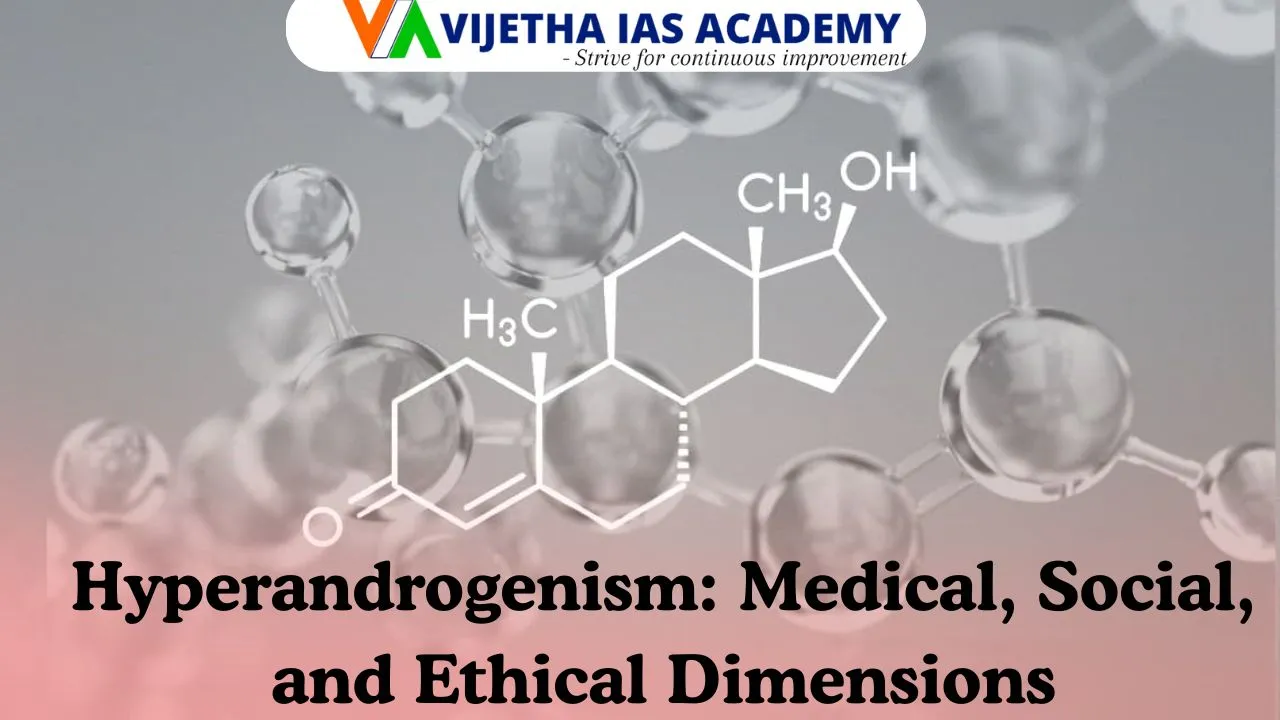
Hyperandrogenism: Medical, Social, and Ethical Dimensions
Introduction
Hyperandrogenism is a medical condition characterised by excessive production of androgens (male sex hormones) in the body, particularly in women. While androgens are naturally present in all humans, elevated levels in women can lead to physical, reproductive, and psychological changes. Beyond biology, hyperandrogenism has become a social and ethical issue, especially in the context of gender norms and women’s participation in competitive sports.
Causes of Hyperandrogenism
1. Polycystic Ovary Syndrome (PCOS)
- Most common cause
- Associated with insulin resistance
- Leads to excess testosterone production
- Influenced by genetics and lifestyle
2. Congenital Adrenal Hyperplasia (CAH)
- Genetic disorder affecting adrenal glands
- Results in excess androgen secretion
- Can cause intersex traits in XX individuals
3. Tumours and Medications
- Rare ovarian or adrenal tumours
- Use of anabolic steroids
Symptoms and Health Implications
Common Symptoms
- Excess facial/body hair (hirsutism)
- Acne and oily skin
- Irregular or absent menstruation
- Hair thinning or baldness
Long-Term Risks
- Infertility
- Type 2 diabetes
- Cardiovascular diseases
- Hypertension
Symptoms vary by age, ethnicity, and genetic background.
Diagnosis and Treatment
Diagnosis
- Physical examination
- Blood tests for androgen levels
- Identification of underlying causes
Treatment
- Oral contraceptives (PCOS cases)
- Corticosteroids (CAH)
- Anti-androgen drugs
Treatment focuses on management, not cure
Hyperandrogenism and Women’s Sports
Controversies
- Sex verification tests
- Testosterone-based eligibility rules
- Accusations of unfair advantage
Notable Cases
- Caster Semenya (South Africa)
- Santhi Soundarajan & Dutee Chand (India)
- Imane Khelif (Paris Olympics controversy)
Experts argue that:
- Testosterone alone does not decide performance
- Training, nutrition, genetics, and environment matter
- Natural biological diversity should be respected
Social Stigma and Gender Norms
- Challenges rigid ideas of femininity
- Leads to discrimination and exclusion
- Reinforces gender binaries
- Affects mental health and dignity
Ethical and Governance Issues
- Violation of bodily autonomy
- Conflict between fairness and natural variation
- Need for rights-based, inclusive sports policies
- Science should guide decisions, not prejudice
Conclusion
Hyperandrogenism is not just a medical condition; it lies at the intersection of biology, society, ethics, and governance. While medical care is essential, the larger challenge is addressing stigma and institutional discrimination. A balanced, human-rights-based approach is necessary to ensure both health equity and social justice.