
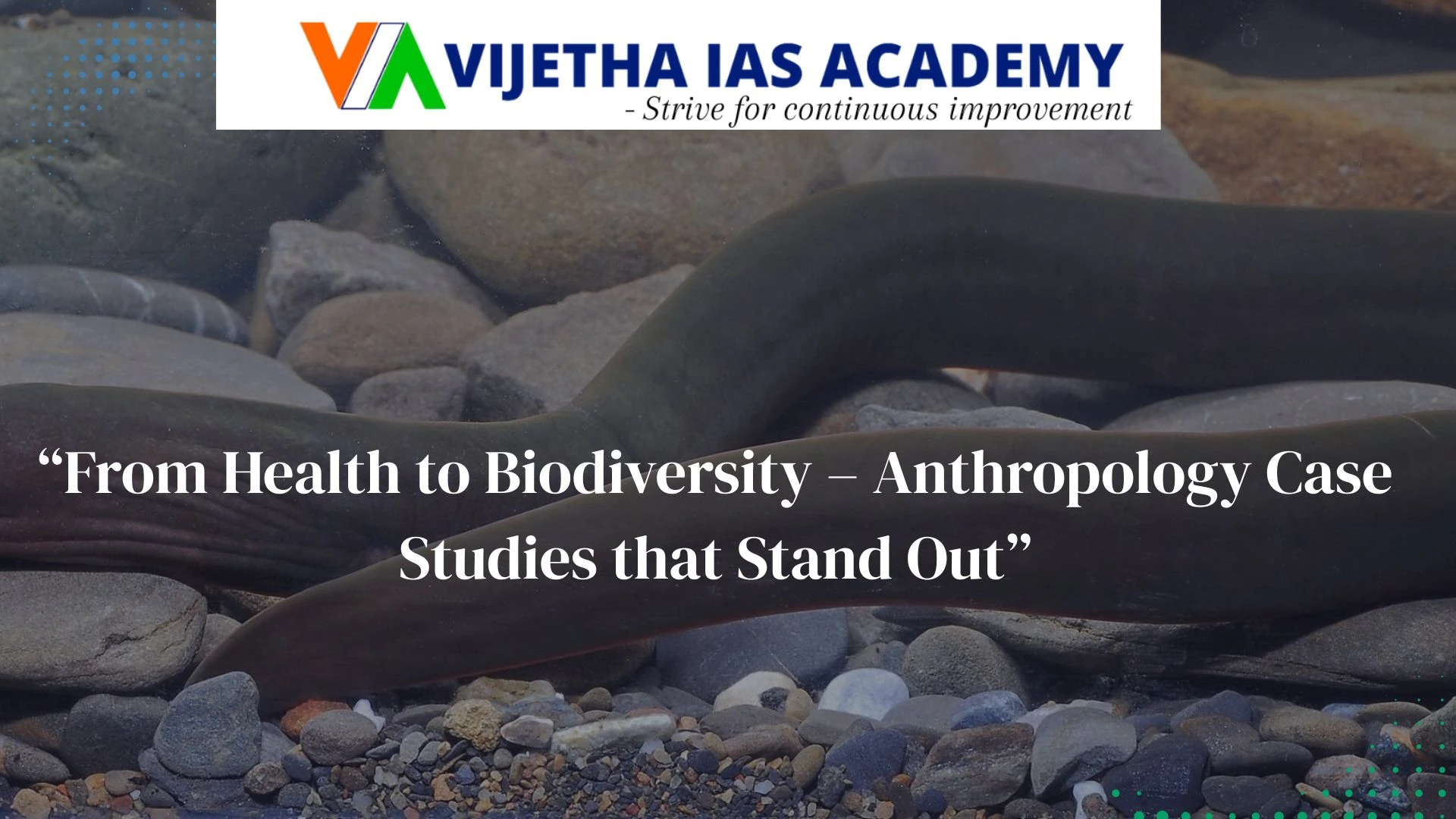
Anthropology Case Studies for UPSC – World Lung Day 2025 & Snake Eel Discovery
Introduction
Case studies play a vital role in UPSC Anthropology preparation. They not only provide real-life examples but also help aspirants enrich answers with contemporary evidence, cultural linkages, and scientific findings. This article presents two relevant case studies from September 2025 – (1) World Lung Day 2025, highlighting respiratory health challenges, and (2) the discovery of a new snake eel species named after Kanniyakumari, showcasing the intersection of science and culture.
Quick Reference Box
- Case Study 1: World Lung Day 2025 → Paper I (9.8 Epidemiological Anthropology)
- Case Study 2: Snake Eel Discovery (Apterichtus kanniyakumari) → Paper I (1.3 Biological Anthropology)
- Keywords: Respiratory diseases, epidemiology, public health, marine biodiversity, taxonomy, culture-science linkages
- Exam Utility: Both cases can be used in Paper I (theory + examples) and Paper II (applied anthropology, policy, environment).
Case Study 1: World Lung Day 2025 – Understanding Respiratory Diseases
Scientific Background
Epidemiological anthropology studies how culture, environment, and lifestyle shape health outcomes. In India, respiratory diseases are influenced by pollution, tobacco use, biomass fuel, and misconceptions around medical practices. World Lung Day 2025 (theme: “Healthy Lungs, Healthy Life”) reinforces the importance of prevention and awareness.
Detailed Case Study Explanation
- Diseases Covered: Asthma, COPD, TB, OSA, Lung Cancer.
- Key Observations:
- Asthma → stigma around inhalers, rising pollution triggers.
- TB → India = 25% of global cases, NTEP still faces drug resistance.
- COPD & Lung Cancer → linked to smoking and biomass fuel.
- OSA → growing due to obesity and thyroid disorders.
- Asthma → stigma around inhalers, rising pollution triggers.
- Mechanisms: Air pollution + lifestyle + cultural beliefs → higher disease burden.
- Policy Response: NTEP, NCAP, vaccination programmes, tobacco control laws.
Anthropological Relevance
- Paper I: Epidemiological anthropology, cultural barriers to treatment.
- Paper II: Public health programmes, awareness campaigns, community healthcare.
Applications in Society
- Stigma around inhalers = cultural anthropology insight.
- Biomass fuel and poverty = socio-economic determinants of disease.
- Case useful for answers on disease ecology and public health anthropology.
Answer-Writing Tip
Use flowcharts (pollution → disease → socio-economic cost), TB data (25% global burden), and mention government policies.
Case Study 2: Science Meets Culture – Snake Eel Discovery in Kanniyakumari
Scientific Background
Biological anthropology emphasises human interaction with biodiversity and the role of taxonomy. In September 2025, Indian researchers discovered a new finless snake eel species (Apterichtus kanniyakumari) off the Colachel coast, named after Kanniyakumari district to honour its cultural heritage.
Detailed Case Study Explanation
- Discovery Details: Depth ~100 m, confirmed via morphological + molecular analysis.
- Unique Features: Golden-yellow colour, black blotches near eyes, unique vertebral formula (52–131).
- Scientific Significance: Expands India’s marine biodiversity records; 16th species discovered by NBFGR.
- Cultural Significance: Naming reflects blending of regional identity with global science.
Anthropological Relevance
- Paper I: Biological anthropology → taxonomy, biodiversity conservation.
- Paper II: Culture and science → naming species after cultural/geographical heritage.
Applications in Society
- Supports biodiversity conservation (SDGs, CBD commitments).
- Highlights importance of indigenous ecosystems in scientific research.
- Shows how cultural anthropology connects with biological findings.
Answer-Writing Tip
Use in answers on biodiversity, anthropology of environment, and science-policy interface.
FAQs
Q1. How can I use these case studies in Anthropology answers?
→ Use World Lung Day for epidemiological anthropology, TB case burden, public health. Use Snake Eel discovery for biological anthropology, biodiversity, and science-culture links.
Q2. Can they be linked with current affairs?
→ Yes. Both are from September 2025, highly relevant for UPSC Mains.
Q3. What diagrams/data can I add?
→ For Case 1: Pollution-disease cycle, lung diagram. For Case 2: Biodiversity map of Indian coast.
PYQ Hook
"Discuss the role of environmental and cultural factors in shaping disease patterns in India." (Case 1 fits directly)
"Examine the role of taxonomy in anthropology with recent examples." (Case 2 fits directly)
Conclusion / Call to Action
These case studies demonstrate that anthropology is not limited to theory, but actively engages with real-world health issues and scientific discoveries. For UPSC aspirants, citing such examples enhances the quality of answers, demonstrates awareness of current affairs, and makes them stand out.
To learn systematic integration of such case studies, join Anthropology Courses and Test Series at Vijetha IAS Academy:
Incorporating daily case studies into your preparation = scoring edge in UPSC Anthropology Optional.