
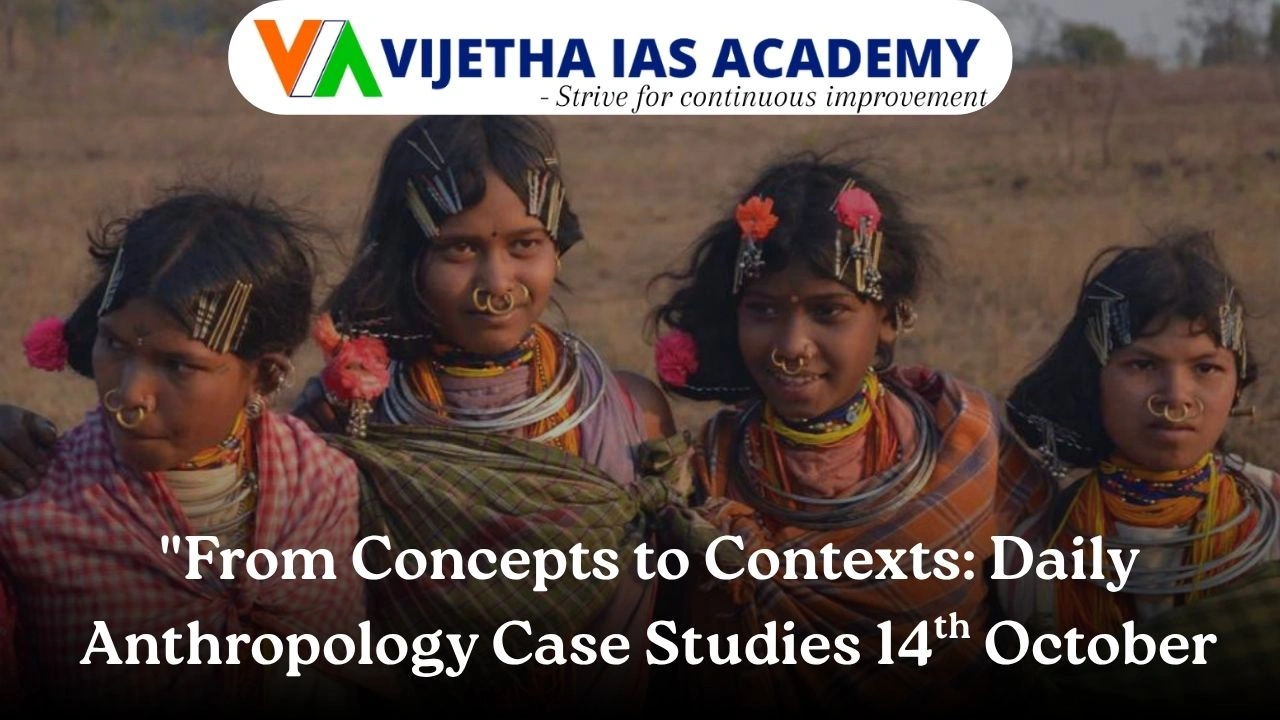
Anthropology Case Study – October 14, 2025
Introduction
Tribal communities in India represent a vital component of the country’s socio-cultural fabric, reflecting deep connections between humans, nature, and tradition. In recent times, issues concerning tribal welfare, inclusion, and rights have gained renewed national attention. The interaction of President Droupadi Murmu with the Siddi community in Gujarat, and the findings of the NCRB 2023 Report on rising crimes against Scheduled Tribes, together illustrate two contrasting yet interlinked realities — symbolic recognition and systemic challenges. This case study examines these developments through an anthropological lens, highlighting their policy, cultural, and ethical implications.
Quick Reference Box
|
|
|
|
|
|
|
|
Scientific Background
Anthropologically, tribal welfare policies in India are rooted in constitutional safeguards (Articles 46, 275, and 338A) and frameworks such as the Fifth and Sixth Schedules. Despite these, structural inequities persist — reflected in access gaps in education, health, livelihood, and justice. The Siddi community, of African descent, represents a unique cultural lineage within Indian society, while the NCRB data underscores persistent vulnerabilities of Scheduled Tribes to violence and exploitation. These contrasting contexts together highlight the ongoing challenge of transforming symbolic recognition into sustainable empowerment.
Detailed Case Study Explanation
Case Study Context
During her official visit to Gujarat, President Droupadi Murmu interacted with the Siddi tribal community at Sasan-Gir. She praised their nature-friendly lifestyle and emphasized the importance of education and welfare participation. Her visit carried significant symbolic and administrative weight, underlining the government’s focus on tribal inclusion.
Simultaneously, the NCRB Report 2023 revealed a 28.8% rise in crimes against Scheduled Tribes, with Manipur showing an alarming spike due to ethnic conflict. While symbolic visits convey recognition, empirical data reveals the ground-level struggle for justice and protection.
Key Observations
- The President’s visit highlighted the need for community-led participation in welfare schemes.
- Literacy among the Siddi community has risen to over 72%, offering a model for educational empowerment among PVTGs.
- The NCRB data, however, reflects an increase in structural violence, social exclusion, and weak law enforcement in tribal regions.
- Rising cyber and gender-based crimes also indicate shifting threats in digital and social domains.
Mechanisms and Process Overview
- Symbolic Representation: Presidential engagement acts as a catalyst for recognition and visibility of marginalized groups.
- Policy Implementation Gaps: Data reveals deficiencies in translating welfare frameworks into effective local governance.
- Cultural Affirmation: By praising the Siddi lifestyle, the event reaffirms the value of traditional ecological wisdom.
- Justice and Governance: NCRB findings expose a widening gap between policy intent and protection outcomes.
Main Takeaways for Anthropology
- Symbolic state recognition must evolve into participatory governance for genuine empowerment.
- Education, awareness, and localized monitoring mechanisms are essential to bridge policy-practice gaps.
- Ethnographic understanding of community structures can improve scheme delivery and crime prevention.
- Anthropology plays a crucial role in interpreting these transitions between cultural resilience and administrative reform.
Anthropological Relevance (Paper I & II)
- Paper I: Illustrates anthropological themes of social organization, cultural adaptation, and evolution of identity.
- Paper II: Relates to tribal development, state policies, and social justice mechanisms within India’s administrative framework.
- Demonstrates how political anthropology intersects with governance and symbolic statecraft.
Applications in Policy and Society
- Strengthening tribal literacy and self-help models like those among the Siddi can enhance inclusion.
- Institutionalize community policing and localized monitoring under the SC/ST (Prevention of Atrocities) Act.
- Launch digital literacy drives to prevent cyber exploitation among vulnerable groups.
- Foster tribal representation in decision-making bodies at local and national levels.
Answer-Writing Guidelines
When incorporating this case study into UPSC answers:
- Use it under Paper II sections on tribal welfare, policy implementation, or PVTG development.
- In essay or ethics papers, cite it as an example of inclusive governance and symbolic leadership.
- Use statistics like “28.8% rise in crimes against STs” and “72% Siddi literacy rate” to support arguments.
- Link it with anthropological theories on participation, empowerment, and identity politics.
FAQs / PYQ Hooks
Q1. How do symbolic gestures of inclusion translate into actual empowerment for tribal groups?
Q2. Examine the challenges of implementing welfare schemes among PVTGs in India.
Q3. Discuss the sociological and anthropological significance of the NCRB 2023 findings.
Use PYQ references from topics like tribal marginalisation, crime and society, and development anthropology.
Conclusion and Call to Action
The twin narratives — the President’s empathetic engagement and the NCRB’s troubling statistics — capture India’s dual reality of progress and persistent inequality. From an anthropological standpoint, sustainable tribal development requires inclusive participation, data-driven policy, and cultural preservation. Anthropology students and aspiring professionals must analyse such events as living case studies in India’s evolving governance structure.
For continued preparation and structured Anthropology programs, explore:
Vijetha IAS Anthropology Courses
Vijetha IAS Anthropology Test Series