
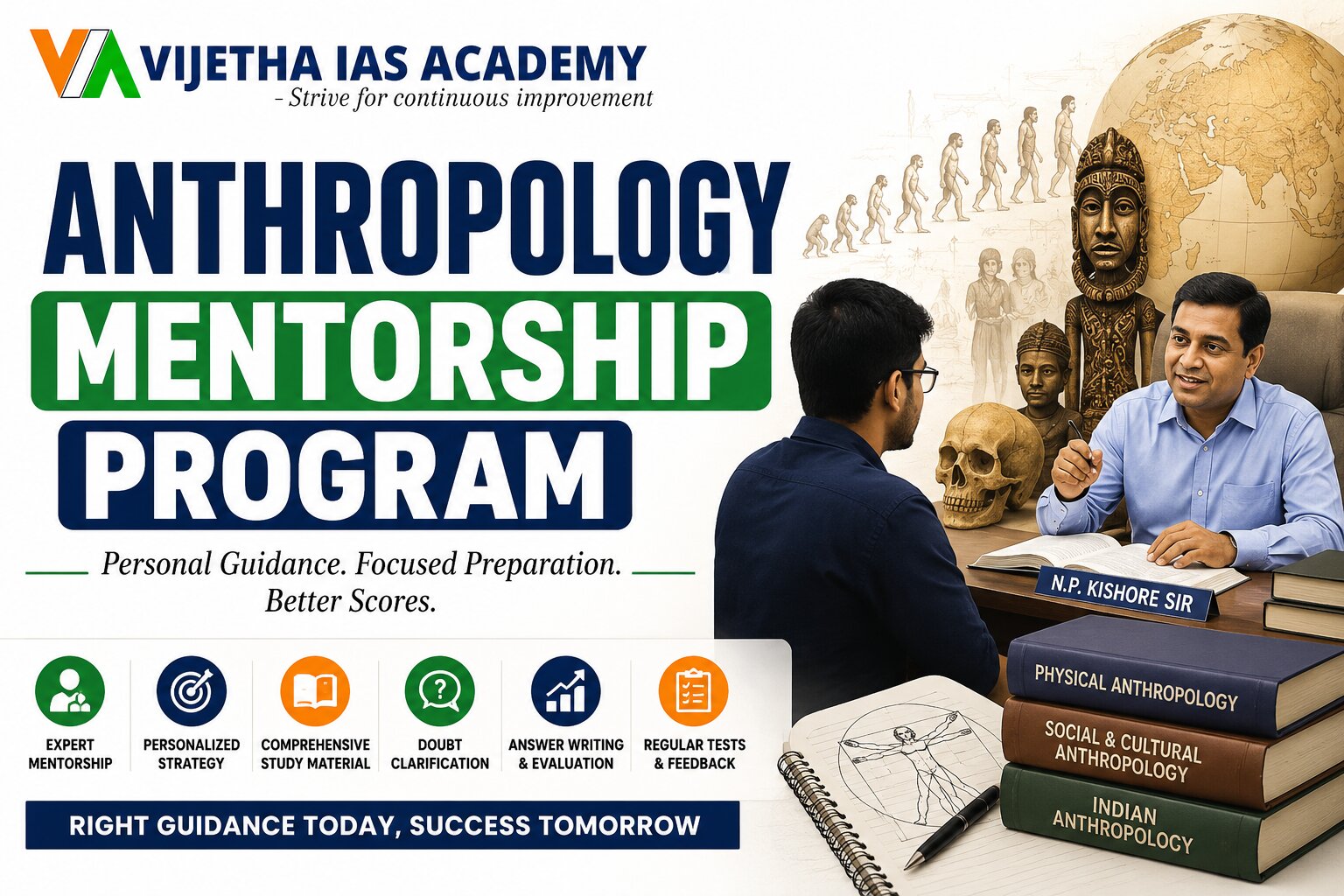
Anthropology Mentorship Program: The Complete Guide to UPSC Success with Expert Guidance
Choosing the right optional subject is only the beginning of the UPSC journey. The real challenge lies in maintaining consistency, receiving timely guidance, and understanding what UPSC expects in the Mains examination. This is where an effective Anthropology Mentorship Program can make a significant difference.
Anthropology has emerged as one of the most preferred optional subjects among UPSC aspirants because of its concise syllabus, scoring potential, and overlap with General Studies. However, even with a manageable syllabus, many candidates struggle with answer writing, revision planning, and integrating current affairs into their preparation.
A structured mentorship program bridges this gap by providing personalized guidance, strategic planning, and continuous evaluation. Whether you are preparing from Delhi, Hyderabad, Bengaluru, Vijayawada, Chennai, or any other part of India, mentorship can help transform your preparation into measurable results.
In this article, we will explore everything you need to know about an Anthropology Mentorship Program, its benefits, preparation strategies, and why aspirants are increasingly opting for anthropology optional online coaching to achieve their UPSC goals.
What Is an Anthropology Mentorship Program?
An Anthropology Mentorship Program is a personalized guidance initiative designed to help UPSC aspirants prepare effectively for Anthropology Optional.
Unlike conventional coaching, mentorship focuses on:
- Individual preparation strategies.
- Regular performance analysis.
- Personalized feedback.
- Answer-writing improvement.
- Revision planning.
- Motivation and accountability.
The objective is not merely to complete the syllabus but to ensure that aspirants develop the skills required to score 280–320+ marks in Anthropology Optional.
A mentor helps candidates identify their strengths and weaknesses while ensuring they remain on track throughout the preparation journey.
Why Is Mentorship Important for Anthropology Optional?
Many aspirants begin Anthropology preparation with enthusiasm but encounter challenges such as:
- Incomplete syllabus coverage.
- Lack of answer-writing practice.
- Difficulty understanding Paper II.
- Inconsistent revision.
- Poor time management.
- Limited guidance on previous year questions.
- A mentorship program addresses these issues systematically.
Key Benefits of Anthropology Mentorship
- Personalized study plans.
- Weekly progress tracking.
- Regular doubt-clearing sessions.
- Detailed answer evaluations.
- Current affairs integration.
- Interview and personality development support.
Mentorship provides the structure that many self-study aspirants often miss.
Why Anthropology Is a Popular Optional Subject
Anthropology continues to be a favorite optional because of:
- A concise syllabus.
- Scientific and conceptual topics.
- Significant overlap with GS and Essay.
- Availability of quality notes and resources.
- Consistent success rate among UPSC toppers.
Over the years, several candidates have secured top ranks with Anthropology Optional, proving that a strategic approach can yield exceptional results.
Components of a Good Anthropology Mentorship Program
An ideal mentorship program should include:
1. Syllabus Planning
Candidates receive a structured roadmap covering:
- Human Evolution
- Genetics
- Social Anthropology
- Tribal Studies
- Indian Anthropology
- Applied Anthropology
2. Answer Writing Guidance
Mentors provide:
- Daily answer-writing practice.
- Evaluation with personalized feedback.
- Model answers.
- Diagram techniques.
3. Test Series
Regular tests help aspirants:
- Improve speed.
- Build confidence.
- Identify weak areas.
- Practice time management.
4. Revision Strategy
Effective revision includes:
- Weekly revisions.
- Monthly assessments.
- PYQ-based preparation.
- Current affairs updates.
Anthropology Mentorship Program: Daily Schedule
A disciplined daily routine plays an important role in UPSC preparation.
Suggested Daily Schedule
|
|
|
|
|
|
|
|
|
|
|
|
|
|
|
|
|
|
|
|
|
|
|
|
|
|
|
Following a consistent routine helps candidates complete the syllabus efficiently while maintaining a balance between General Studies and Anthropology.
Importance of Notes in Anthropology Preparation
Well-organized notes can significantly reduce revision time.
Candidates should maintain:
- Topic-wise notes.
- Tribal case studies.
- Anthropologists' contributions.
- Current affairs additions.
- Diagram collections.
Effective notes should be concise, regularly updated, and easy to revise before the examination.
Mentorship programs often provide curated study material that saves valuable preparation time.
Why Answer Writing Matters
Many aspirants underestimate the importance of answer writing.
However, Anthropology is one optional where presentation plays a major role.
Effective Answer Writing Includes:
- Structured introductions.
- Use of flowcharts.
- Relevant diagrams.
- Anthropological thinkers.
- Contemporary examples.
- Balanced conclusions.
Experts recommend writing at least one answer daily and attempting full-length tests regularly.
Aspirants who consistently practice answer writing often demonstrate significant improvements in their Mains scores.
Classroom Program for Anthropology Optional
Many aspirants prefer classroom coaching because of the interactive learning environment.
Benefits of Classroom Programs
- Face-to-face mentorship.
- Instant doubt clarification.
- Regular assessments.
- Peer learning opportunities.
- Structured preparation.
The Anthropology Classroom Program at VIJETHA IAS ACADEMY focuses on:
- Comprehensive syllabus coverage.
- Weekly tests.
- Personalized mentorship.
- Answer-writing sessions.
- Continuous performance evaluation.
Classroom programs are particularly beneficial for aspirants who thrive in a disciplined academic environment.
Anthropology Optional Online Coaching
The popularity of anthropology optional online coaching has grown rapidly over the past few years.
Students from across India are now choosing online programs because they offer:
- Flexible schedules.
- Recorded lectures.
- Access from any location.
- Affordable learning options.
- Digital study materials.
- Online mentorship support.
If you are searching for the best online classes for anthropology optional, consider the following factors:
- Faculty expertise.
- Student success stories.
- Quality of notes.
- Availability of mentorship.
- Test series performance.
- Regular interaction sessions.
Online coaching has made quality Anthropology education accessible to aspirants irrespective of geographical boundaries.
Learn Under the Guidance of N.P. Kishore Sir
One of the most important aspects of an Anthropology Mentorship Program is the quality of mentorship.
N.P. Kishore Sir has mentored numerous Anthropology aspirants through a result-oriented approach focused on:
- Conceptual clarity.
- Simplified explanations.
- PYQ integration.
- Diagram-based learning.
- Strategic preparation.
Students often appreciate his emphasis on revision, answer writing, and personalized guidance.
His mentorship methodology is centered on helping aspirants understand not just what to study, but how to study effectively for UPSC.
Student Testimonials
Anurag Singh (AIR 120)
The mentorship sessions helped me maintain consistency and significantly improve my answer presentation.
Sreelakshmi VC (AIR 133)
The personalized feedback and structured preparation strategy made Anthropology easier to manage.
Saima Ahmed (AIR 135)
The Anthropology mentorship and test series under N.P. Kishore Sir played a crucial role in my preparation journey.
These experiences highlight the importance of guidance, discipline, and continuous evaluation in achieving UPSC success.
How Mentorship Helps Improve Scores
Candidates enrolled in mentorship programs often experience improvements in:
Answer quality.
- Time management.
- Revision efficiency.
- Conceptual understanding.
- Confidence during Mains.
Mentorship ensures that aspirants avoid common mistakes and focus on areas that directly contribute to better performance.
Tips to Maximize Your Anthropology Preparation
- Complete the syllabus within five months.
- Solve previous year questions regularly.
- Maintain concise notes.
- Practice answer writing every day.
- Use diagrams wherever possible.
- Revise weekly and monthly.
- Seek feedback from mentors.
Stay updated with current affairs related to Paper II.
Consistency remains the most important factor in UPSC preparation.
Recommended blog by vijetha ias academy
👉Anthropology Optional Syllabus for UPSC
👉Anthropology Syllabus for UPSC 2026 - 27
Conclusion
An effective Anthropology Mentorship Program can provide the structure, guidance, and accountability necessary to excel in UPSC Anthropology Optional. Whether you choose a classroom program or anthropology optional online coaching, mentorship can help you stay focused, improve answer writing, and develop a strategic preparation plan.
Frequently Asked Questions (FAQs)
1. What is an Anthropology Mentorship Program?
It is a personalized guidance program designed to help UPSC aspirants prepare Anthropology Optional through mentorship, answer writing, and performance tracking.
2. Is Anthropology Optional a scoring subject?
Yes. Anthropology is considered one of the most scoring optional subjects in UPSC due to its concise syllabus and analytical nature.
3. Who can join an Anthropology Mentorship Program?
Both beginners and experienced aspirants preparing for UPSC can benefit from mentorship programs.
4. Does mentorship include answer-writing practice?
Yes. Most mentorship programs include daily or weekly answer-writing practice along with detailed evaluations.
5. Are online mentorship programs effective?
Yes. Modern anthropology optional online coaching programs offer live classes, recorded sessions, notes, and regular interaction with mentors.
6. Who guides Anthropology students at VIJETHA IAS ACADEMY?
Anthropology aspirants are mentored by N.P. Kishore Sir, who focuses on conceptual clarity, answer writing, and strategic preparation.
7. Which are the best online classes for Anthropology Optional?
The best online classes typically offer experienced faculty, structured notes, mentorship, and regular test series support.