
Caste, Corruption, and Crisis of Accountability – The Murky Deaths within Haryana Police
Introduction
The tragic deaths of IPS officer Y. Puran Kumar and ASI Sandeep Lather in October 2025 shook the Haryana Police. They exposed deeper social fractures — caste-based discrimination, corruption, and institutional failure. This case prompts us to reflect on how caste and power dynamics continue to influence India’s bureaucracy today.
Background of the Case
- 7th October 2025: IPS officer Y. Puran Kumar (2001-batch IGP) was found dead at his residence in Chandigarh.
- His note accused senior officers of caste-based harassment and institutional discrimination.
- His wife, IAS officer Amneet P. Kumar, demanded arrests before allowing a postmortem.
- A few days later, ASI Sandeep Lather, who had handled one of Puran’s cases, also died by suicide, blaming corruption and opposing the “caste colour” given to the case.
The Key Issues Exposed
1. Caste Bias in Bureaucracy
Even in elite services like the IAS and IPS, officers from marginalized communities often face institutional discrimination and humiliation.
Puran Kumar’s death revived debates about caste barriers within India’s administrative framework.
2. Systemic Corruption and Accountability
Both deaths hinted at a corrupt nexus between police, bureaucrats, and contractors.
It reflected how personal integrity and institutional accountability often clash in real-world governance.
3. Political and Administrative Fallout
The controversy created political turmoil. Opposition parties demanded a judicial probe, while the state government faced criticism for alleged cover-ups.
4. Caste Polarisation in Society
Dalit organisations termed Puran’s death as an institutional murder, while other groups defended the accused officers.
This deepened social polarisation similar to the 2016 Jat agitation in Haryana.
Anthropological Insight
From an anthropological lens, this incident highlights:
- The persistence of caste hierarchy in modern institutions.
- Role conflict when social identity clashes with professional duty.
- Ethical and cultural breakdown in state systems meant to protect equality.
It also shows that modernization has not fully erased traditional inequalities — they simply take new institutional forms.
Lessons and Reforms Needed
- Strengthen internal grievance redressal mechanisms in civil services.
- Offer psychological and peer support to officers under workplace stress.
- Enforce anti-discrimination policies and ethical codes of conduct in bureaucracy.
- Promote diversity and inclusivity training within government departments.
Conclusion
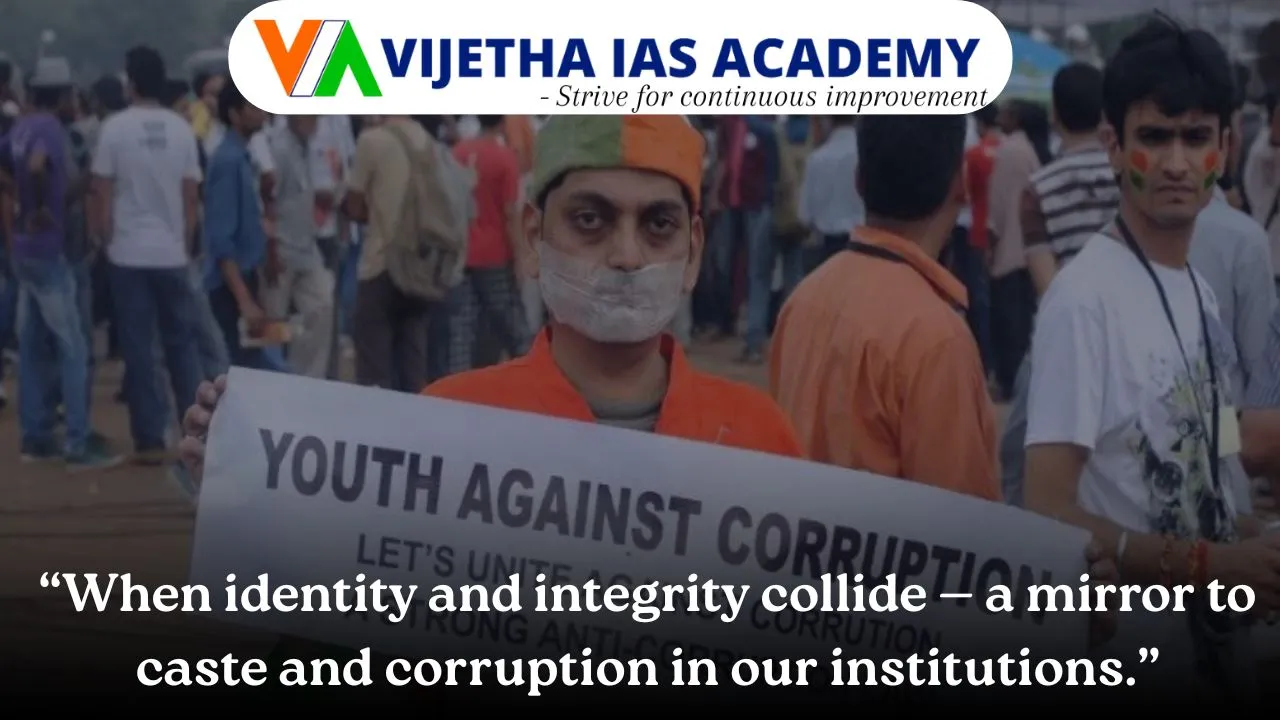
The Haryana Police tragedy is more than a news story — it’s a mirror reflecting how caste and corruption still influence India’s governance. Upholding justice, equality, and integrity is not just a constitutional duty but also a moral one.
At Vijetha IAS Academy, Delhi, we guide aspirants to approach such sensitive issues through the lens of Anthropology — connecting caste, institutions, and ethics in UPSC preparation.
Join our Anthropology Optional Coaching and Anthropology Test Series to develop analytical depth for Paper II case studies.