
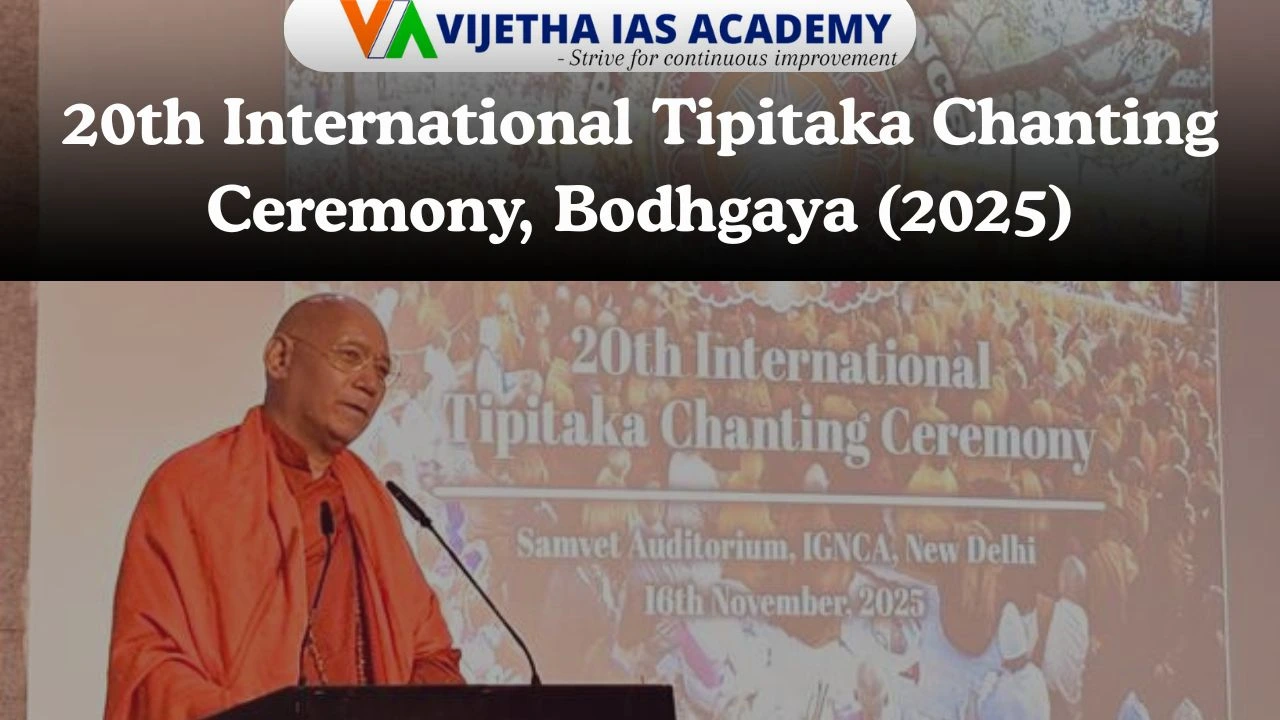
India’s Cultural Diplomacy in Action – The 20th International Tipitaka Chanting Ceremony, Bodhgaya (2025)
Bodhgaya, the sacred place where the Buddha attained enlightenment, hosted the 20th International Tipitaka Chanting Ceremony in 2025. This event became historic because 17 Buddhist organisations from across India came together for the first time to collectively organise it. This unity showed how India’s Buddhist institutions are slowly becoming stronger, more organised, and more collaborative.
What Happened?
- Thousands of monks and devotees from more than 10 countries participated.
- The chanting of the Tipitaka (the Buddhist canon) took place under the Bodhi Tree for 10 days.
- The Ministry of Culture supported the event, and international Buddhist bodies also joined hands.
- There were cultural performances, art exhibitions, a heritage walk, and donation of 220 golden Buddha statues handcrafted in Odisha.
Why Is It Important?
1. Cultural Revival of Buddhism in India
- Pali, the ancient Buddhist language, received recognition and attention.
- India reconnected with its Buddhist past and heritage in a meaningful way.
- Showed that India is reclaiming its role as the birthplace of Buddhism.
2. India’s Soft Power on the Global Stage
- Monks and devotees from Southeast Asia, South Asia, and the West visited India.
- Strengthened India’s cultural ties with Buddhist-majority countries.
- Supported government initiatives like the Buddhist Circuit.
3. Community Participation
- Over 1,000 volunteers and 15,000 Indian monks took part.
- For the first time, Theravada, Mahayana, and Vajrayana organisations worked together.
- This collaboration indicates rising unity among Indian Buddhist groups.
4. Governance & Event Management
- The Bihar administration managed a 12-day global festival with food tents, security, cultural shows, and international coordination.
- This event can act as a model for religious tourism management.
5. Ethical and Spiritual Values
- The entire event emphasised compassion, peace, discipline, and non-violence—core moral values of Buddhism.
- Participants stressed how chanting helps in mental well-being.
Government Involvement
Senior leaders like Pema Khandu, Kiren Rijiju, and Nitin Gadkari attended the event. Their presence showed political support for cultural diplomacy based on India’s ancient heritage.
Overall Impact
- Increased India’s global cultural influence
- Improved tourism and local economy in Bihar
- Strengthened intangible heritage like chanting traditions and Buddhist art
- Promoted national integration by bringing communities from different states together
Conclusion
The Tipitaka Chanting Ceremony showcases cultural revival, community-led heritage protection and India’s expanding soft power. It reaffirms India’s role as a Vishwa Guru rooted in peace, compassion and cultural continuity.