
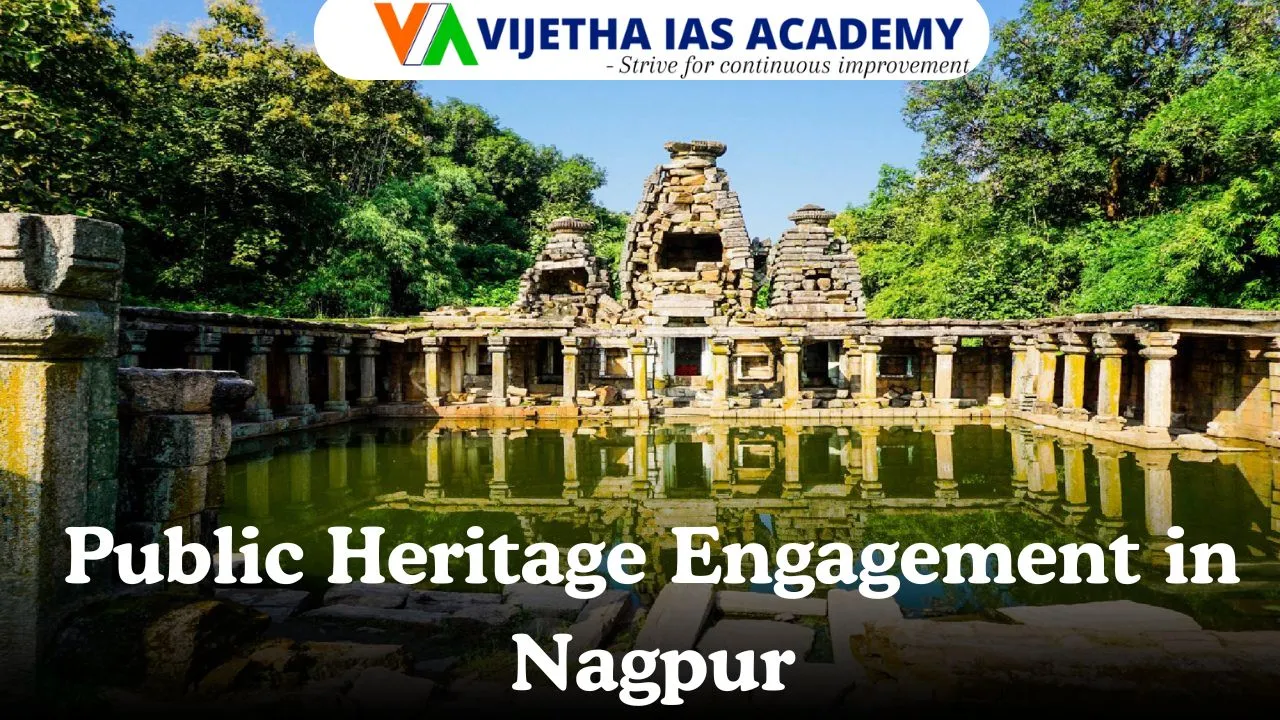
Public Heritage Engagement in Nagpur
Introduction
Heritage often feels like something distant — old buildings, dusty museums, and history books that students rarely enjoy. However, when heritage becomes interactive and engaging, it becomes a powerful tool for learning and identity-building.
In November 2025, Nagpur proved exactly that during World Heritage Week, showing how culture can come alive when people participate actively.
This article explains the event in an easy, reader-friendly way.
Nagpur’s Heritage Week: When Culture Stepped Out of Museums
Every year, India observes World Heritage Week between 19 and 25 November.
But in 2025, Nagpur decided to do something different:
Instead of limiting heritage to quiet museum halls, two major institutions —
Raman Science Centre (RSC) and Archaeological Survey of India (ASI) — brought heritage directly to the public.
Their goal: Make history exciting, interactive, and accessible to everyone.
What Exactly Happened?
1. Fun & Scientific Exhibitions
At the Raman Science Centre, students saw:
- how archaeologists dig and find artefacts,
- how dating techniques work,
- miniature models of excavations,
- exhibits on India’s 44 UNESCO World Heritage Sites.
For many students, this was their first time “seeing” archaeology, not just reading about it.
2. Hands-on Heritage at ASI
At the ASI campus in Seminary Hills, Nagpur:
- ancient inscriptions were displayed,
- calligraphy styles like Naskh and Kufi were explained,
- coins and seals were shown with their historical stories,
- students spoke directly with epigraphists.
This made them realise that heritage is not boring — it’s actually a detective story of the past.
3. Heritage Walks Around Nagpur
Nagpur Municipal Corporation organised “Know Your Nagpur” walks.
Citizens walked through old neighbourhoods, monuments, temples, and government buildings.
People discovered:
- how Nagpur evolved,
- how heritage shapes local identity,
- how culture exists in the spaces we walk through daily.
Why Was This Important?
Most students never get real exposure to archaeology.
Most citizens think heritage is just “old buildings.”
Nagpur’s initiative changed this thinking by:
- introducing science into culture,
- encouraging curiosity,
- making heritage fun instead of textbook-heavy.
Challenges Ahead
Even though the event was successful, some issues remain:
- It was only for one week
- Many rural and tribal heritage sites remain ignored
- More visitors can sometimes damage fragile heritage structures
- Many inscriptions and artefacts in India still remain undocumented
Conclusion
Nagpur’s World Heritage Week 2025 shows how cultural awareness grows when people actively engage with history.
By combining science, public participation, and creative learning methods, the city transformed heritage into something relatable and exciting.
This case study is a beautiful example of how Anthropology connects people with their cultural roots — not through textbooks, but through real experiences.