
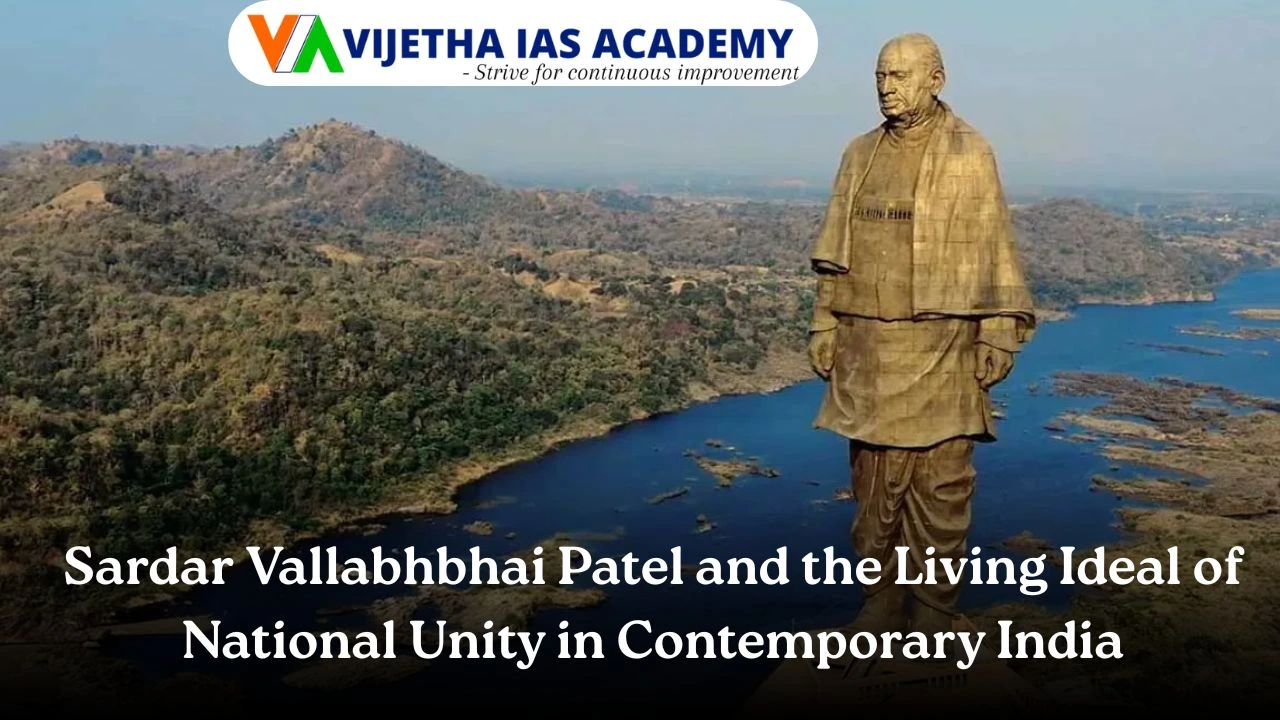
Sardar Vallabhbhai Patel and the Living Ideal of National Unity in Contemporary India
Introduction
Sardar Vallabhbhai Patel, fondly remembered as the "Iron Man of India," played a historic role in uniting the nation after India's independence. As India’s first Deputy Prime Minister and Home Minister, his leadership ensured the seamless integration of over 560 princely states into the Indian Union. Patel’s vision of Ek Bharat, Shreshtha Bharat continues to inspire national integrity even in the 21st century.
Every year, October 31 — his birth anniversary — is celebrated as Rashtriya Ekta Diwas or National Unity Day. The year 2025 marks the 150th birth anniversary of Sardar Patel, celebrated nationwide as a tribute to his dream of a strong and united India.
The Relevance of Patel’s Vision Today
Patel’s idea of unity was never about uniformity — it was about celebrating diversity while staying connected through shared values, emotions, and civic responsibilities. His anthropological understanding of India’s plural society recognised that regional, linguistic, and cultural diversity can coexist within a single national identity.
However, in modern India, challenges such as regionalism, political polarisation, and social alienation threaten this ideal. Anthropology, as a discipline, helps us understand these issues by studying cultural patterns, identity formation, and the mechanisms that hold communities together.
Government Initiatives Upholding National Unity
1. Rashtriya Ekta Diwas (2014 onwards)
To institutionalise the spirit of unity, the Government of India declared 31st October as National Unity Day. The nationwide Run for Unity and related campaigns encourage citizens to reaffirm their collective identity and responsibility towards the nation.
2. 150th Anniversary Celebrations (2025–2027)
The celebrations at Ekta Nagar, Gujarat (home to the Statue of Unity), feature performances by 900 artists from different states. The parades and tableaux promote the message — “Many Voices, One Nation” — embodying India’s cultural pluralism.
3. Cultural Integration through Institutions
The Ministry of Culture’s initiatives — from national museums to zonal art festivals — enable citizens to experience India’s diverse traditions.
The Ek Bharat Shreshtha Bharat programme pairs states and union territories to encourage language learning, food exchange, and art collaborations — like Maharashtra students learning Bihu from Assam or Assamese artists performing Lavani in Pune.
4. Tourism as a Bridge of Cohesion
Campaigns like Dekho Apna Desh and Swadesh Darshan strengthen emotional integration through travel and cultural exposure. In 2024, over 294 crore domestic tourist visits reflected growing citizen engagement and pride in India’s heritage.
5. Integration through Livelihoods
Schemes like PRASHAD and Swadesh Darshan link culture with economic empowerment. When artisans, homestay owners, and local performers collaborate across regions, they create real human bonds that reinforce unity through shared prosperity.
Lessons from Patel’s Vision
- Unity as an Active Civic Duty: Patel’s idea of unity was dynamic — something every generation must renew through empathy and shared purpose.
- Diversity as Strength: India’s cultural and linguistic variety is not a weakness but a source of resilience.
- Link with Modern Governance: Patel’s federal vision aligns with the constitutional ideals of fraternity and cooperative federalism.
- Development and Integration: Balanced economic and cultural linkages reduce regional disparities and enhance national solidarity.
Way Forward
- Encourage youth participation in inter-state cultural and educational exchanges.
- Promote inclusive development models combining economic growth with cultural preservation.
- Strengthen digital platforms showcasing regional art and heritage to connect communities virtually.
- Uphold the Panch Pran pledges of Amrit Mahotsav, placing national unity at the core of Viksit Bharat 2047.
Conclusion
Sardar Vallabhbhai Patel’s greatest tribute lies not in grand monuments but in living his ideals. Unity is not a destination but a continuous journey of empathy, inclusion, and shared pride. As India moves towards 2047, Patel’s vision of Ek Bharat, Shreshtha Bharat remains both a guiding philosophy and a practical foundation for a strong, cohesive Republic.